Posts

Folklore: Cleves Cross and the Slaying of the Brawn
Image
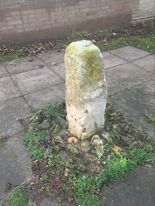
A short while ago, I cycled to the east of Ferryhill to find what is alleged to be the remains of "Cleves Cross", a monument steeped in local folklore. Ferryhill is a town to the east of Spennymoor, much of which was built during the County's mining heyday. The coal mines, such as Dean and Chapter colliery, provided employment for many Ferryhill townspeople (it was also the workplace of Spennymoor painter Norman Cornish). But in this post, I will be delving into the area's deeper past. To a time before the industrial revolution. The small stone Cleves Cross monument, sitting unassumingly near a bus stop on the east of the village allegedly marks the spot where Roger de Fery cunningly slayed the wild "Brawn" (boar) which had been terrorising local folk, including those in nearby Branspeth and Croxdale.  Below are pictures of Cleves Cross and the nearby information plaque:  The Brawn It's difficult to imagine now, but wild boars were once numerous in the f...

I'm a Bagger!

Last year, I was on a guided walk put on by the North Pennines AONB team, taking in three Nuttalls, including Little Fell, Tinside Rigg and Long Fell. These fells fall within the Warcop Army Training zone and access to them is not permitted, except on the annual guided walk put on by the North Pennines team. Whilst in the car park, awaiting our walk to start, I was approached by one of the other attendees, a tall thin man who looked to be in his late sixties. After some small talk, he outlined his rationale for attending the walk. "I'm a bagger!" he quipped, with a smile on his face and a glint in his eye.  There is no official definition of what a bagger is. The man I spoke to meant that he visits the summits of hills and mountains and tries to "bag" each summit within a particular classification. I'll say more about some of these classifications shortly. But you do not need to walk hills to be a bagger: you could bag other natural features, for instance, a...

Lancashire Walk: Towneley Hall to the Swinging Ringing Tree

Image
In January, I started a new job working at Burnley College. Burnley is an industrial town in east Lancashire. The town is surrounded by countryside out to the pennine hills, it hosts a section of the Leeds to Liverpool canal and has several pleasant parks such as Towneley and Thompson park. From outside of the college, I can see a small hill in the distance with a monument on top. This is the Swinging Ringing Tree, a wind powered sculpture designed by Mike Tonkin and Anna Liu, completed in 2006. I have been meaning to see the sculpture close up for some time now. And with the nice weather over the weekend, I decided to go for it. There is a car park at Crown Point, which is really close to the Singing Ringing Tree (I have subsequently been informed that this car park is used for more questionable purposes, which I will leave to the reader's imagination). To make more of a walk of it, I decided to start from Towneley Hall Estate Car Park (£1.50 for the day). There are several car pa...

Croxdale Hall Circular

Image
Croxdale Hall is a manor house near Sunderland Bridge. The house is owned by the Salvin family and has been since the staunchly Catholic Gerard Salvin moved to Croxdale in the 15th Century. Croxdale Hall is a grade 1 listed building. Just up from the Hall is an even older chapel, dating back to the 12th Century. The chapel used to belong to the parish of St Oswalds in Elvet. Unfortunately, there is no access to the chapel's green and the building itself is in a state of disrepair. But from the outside at least, it looks in fine shape for one of the oldest buildings in County Durham.  Though there is very limited access to Croxdale Hall itself (I've read a number of sources suggesting that the hall is opened to the public on occasion, but I have been unable to find any information on how and when it is possible to visit), there are many public rights of way around and nearby the estate, offering some of the finest walking territory in this area. The walk devised here is just sho...

The Norman Cornish Trail

Image
  Norman Cornish Trail   Norman Cornish (1919-2014) was an acclaimed painter born in Spennymoor. Though perhaps best known for his ‘mining scenes’ depicting the work and socialising of the miners of the Durham coalfield, Cornish depicted a wide array of subjects and the breadth and quality of his work make the oft-attributed label “pitman painter” something of a misnomer. True, Cornish worked as a miner for most of his working life, and the lives of miners and their families form the backdrop of many of his most well-known works. But the term “pitman painter” suggests that Cornish’s reputation rests on the novelty of his being a working miner who painted, rather than on the brilliance of the art itself. Like many great artists, his inspiration was drawn from the world he inhabited. As Cornish once said: “Spennymoor has all that a painter needs to depict humanity.” And it is perhaps his ability to depict the humanity of his subjects that distinguishes his work from some of ...

Whitworth to Wright's Folly: A Circular Walk

Image
  Whitworth to Wright’s Folly: A Circular Walk   History Thomas Wright (1711-1786) is topical at the moment with the recent unveiling of a commemorative plaque in his name in his birthplace of the small village of Byers Green, near Spennymoor. I am yet to visit the plaque and the walk featured here does not pass through Byers Green. An earlier post on the North East leg of the Camino de Santiago covers this area if you are interested. The main feature of this walk lies a little closer to my childhood home of Middlestone Moor, in the nearby hilltop village of Westerton, where Wright designed an observatory tower (or “folly”) which remains fairly well intact to this day. Below I provide some historical details about Wright and his folly as well as more general information about the area covered. At the bottom, I describe the route in detail should you be interested in following it.   Wright and his Folly Thomas Wright was something of a polymath. He is best know...

A Winter Ramble From Knott End: Route Included

Image
It's the first of December and what better to mark the occasion than with a ramble. I wasn't sure where I wanted to go. I have been walking Lancaster canal in sections, soon to reach the northern-most point near Kendal, but I thought I'd leave this till the end of the week. I have a few other long distance walks on the go, which I am doing in stages. The one I decided to add to today was the Wyre Way. The river Wyre runs from the grassy slopes of Hawthornthwaite Fell in the Forest of Bowland to its estuary between Knott End and Fleetwood. I walked a couple of sections last year. I found the river's source (or should I say one of its sources) on Hawthornthwaite and followed it to nearby Abbeystead. And around this time last year I walked a section from Scorton Picnic Site to Garstang, which was a very pleasant section. Today I started from the opposite end of the river, at its mouth at Knott End. The walk follows a circular route, taking in a short section of the Wyre Wa...